German Shepherd
Loyal, smart and hard working. The German Shepherd was developed in Germany from 1899 as a herding dog and became a top working breed. Temperament, exercise, grooming and health.
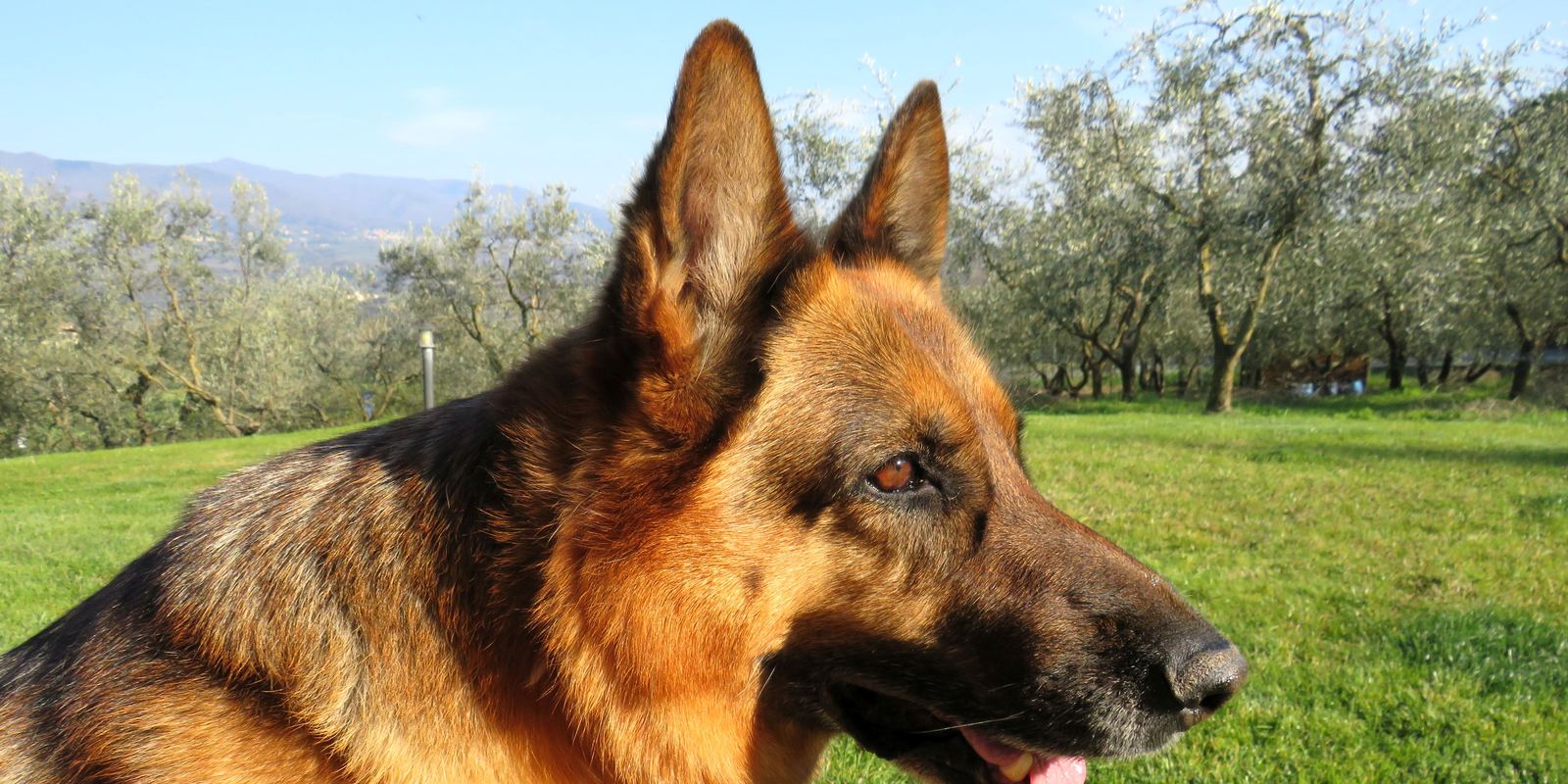
A German Shepherd in the sun: PROPOLI87, CC BY-SA 4.0
Where the breed comes from
The German Shepherd was developed by Max von Stephanitz, who set out in 1899 to create the ideal herding dog from German farm dogs. He valued intelligence and working ability over looks.
When herding jobs declined, the breed's trainability made it a favourite for guiding blind people, search and rescue, police work and sport.
Personality and family life
German Shepherds are deeply loyal and often bond closely with their family. They are confident and watchful, and can be reserved with strangers. Well-socialised Shepherds are steady, gentle companions, but they need guidance from puppyhood.
They are happiest with a job, whether that is obedience, tracking, agility or simply learning new tricks.
Daily care: exercise, grooming, training
Expect one to two hours of exercise and mental work a day. They shed year round and heavily in spring and autumn, so brush several times a week. Start socialising puppies early with many people, places and sounds, and use positive, consistent training.
Is this breed right for you?
Great for experienced owners who enjoy training and want a devoted, protective companion for hikes and dog sports. Less suited to first-time owners who cannot commit to daily training and socialisation, or to homes where the dog would be left alone for long hours.
Fun facts
The breed was called the Alsatian in Britain for several decades in the 1900s before the original name returned. German Shepherds have worked as guide dogs since the earliest guide dog schools, and their keen noses make them strong search and rescue dogs. Coats can be standard or long.
Health and good to know
The breed is prone to hip and elbow dysplasia, degenerative myelopathy and bloat, a stomach emergency that can affect large deep-chested dogs. Feeding smaller meals and avoiding hard exercise right after eating is often advised.
Every pet is an individual, so use this as a starting point and ask your vet about diet, vaccines and health checks for your own animal.
- A German Shepherd in the sun: PROPOLI87, CC BY-SA 4.0
Text written by Most Beautiful Pets.