Hamsters
Tiny night-time explorers. Syrian hamsters live alone, dwarf species vary, and all hamsters need space, deep bedding and a solid wheel. Care basics and common mistakes.
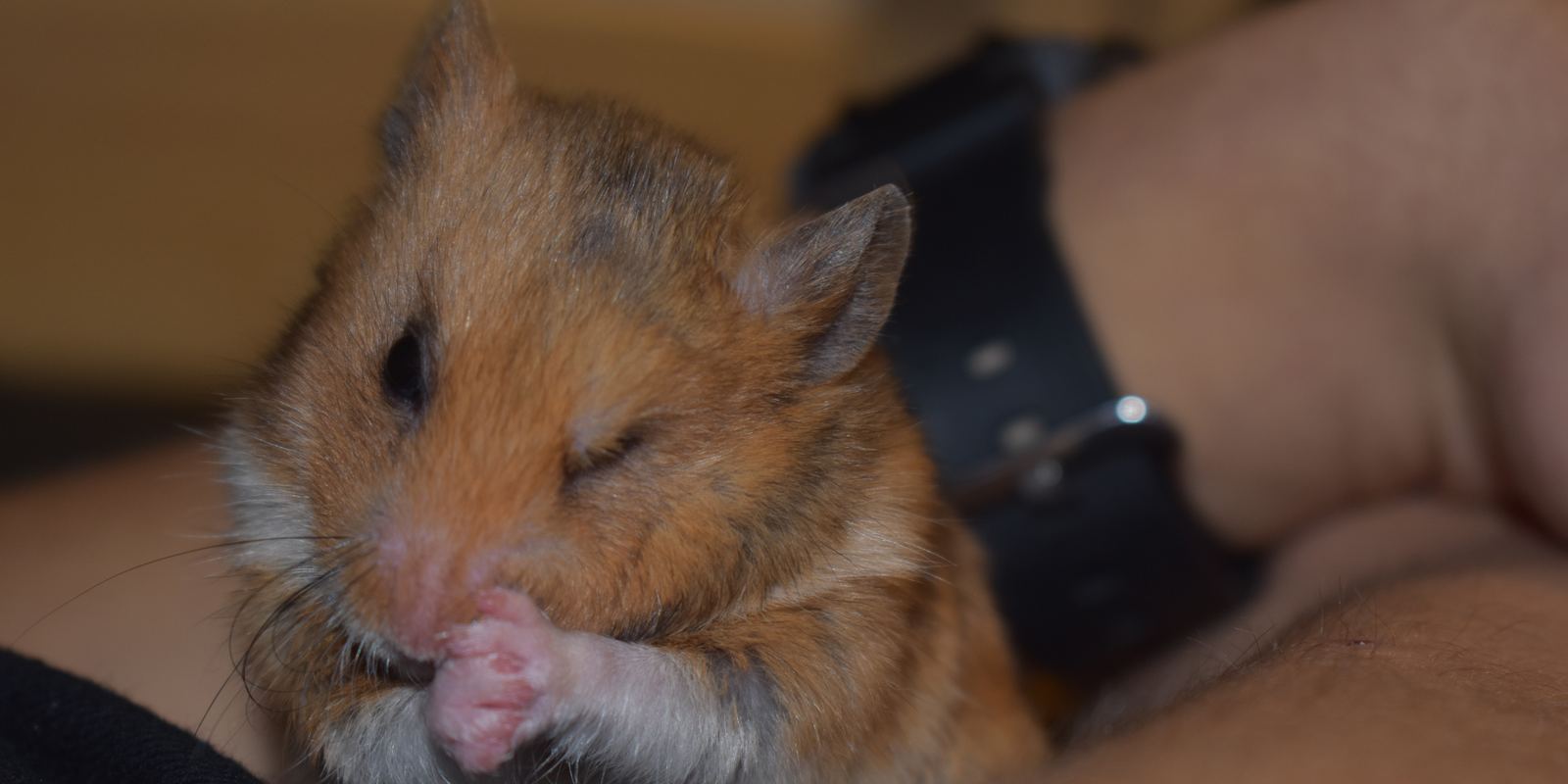
A Syrian hamster: John Stockla, CC BY-SA 4.0
Meet the species
The Syrian or golden hamster is the most common pet hamster. Almost all pet Syrians descend from a few animals collected near Aleppo in 1930 for research. Smaller dwarf species include the Roborovski, Campbell's and winter white hamsters.
All hamsters store food in stretchy cheek pouches and carry it back to a hidden stash.
Living alone or together
Adult Syrian hamsters are solitary and will fight if housed together, so each needs its own home. Some dwarf species can live in pairs, but fights still happen, and many owners and rescue groups now recommend keeping hamsters singly.
Housing that fits their nature
Hamsters run long distances at night in the wild. Give them a large enclosure with plenty of floor space, very deep bedding for burrowing, hides, chew items and a solid-surface wheel big enough that the back stays straight while running. Small cages and narrow wheels can cause stress and injury.
Place the cage in a quiet room away from direct sun, and avoid waking a sleeping hamster during the day.
Food and health
Good starter kit: a large tank or cage with a big floor area, paper-based bedding piled deep, a solid wheel of the right size, a sand bath for dwarf species, chews and several hides. Let a new hamster settle for a few days before handling, then build trust with treats from your hand.
A good hamster mix or lab block, small amounts of fresh vegetables and occasional protein such as a bit of plain cooked egg meet most needs. Avoid sugary treats, citrus and sticky foods. Wet fur around the tail, weight loss or overgrown teeth need a vet visit. Hamsters live only a few years, so they are best for families ready to enjoy a short but lively friendship.
Every pet is an individual, so use this as a starting point and ask your vet about diet, vaccines and health checks for your own animal.
- A Syrian hamster: John Stockla, CC BY-SA 4.0
Text written by Most Beautiful Pets.