Norwegian Forest Cat
Nature's winter-proof cat. The Norwegian Forest Cat is a big, long-haired breed shaped by Scandinavian winters. History, coat care, personality and size facts.
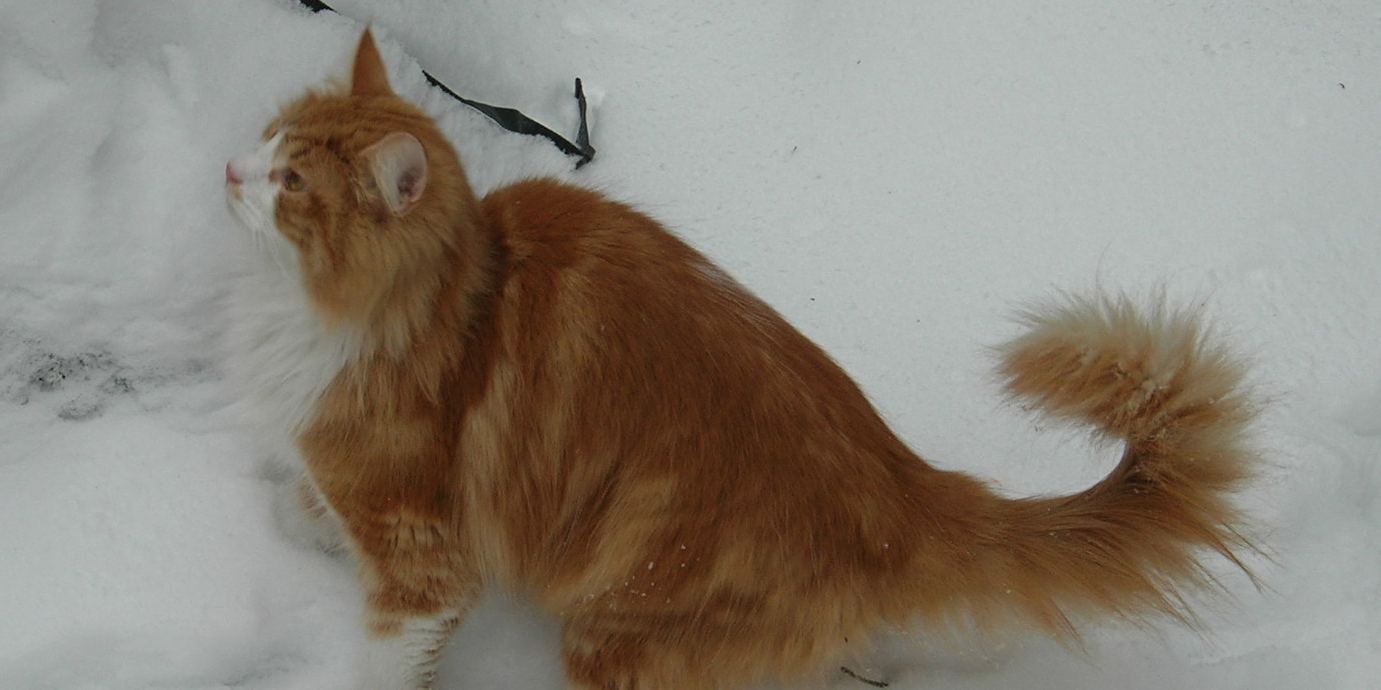
A Norwegian Forest Cat in snow: Durator, Public domain
Where the breed comes from
The skogkatt, or forest cat, developed naturally in Norway's cold climate, and it appears in Norwegian folk tales. Breeders worked to preserve it in the 1900s, and it gained international recognition in the 1970s.
Personality and family life
Wegies, as fans call them, are friendly, gentle and sociable without being demanding. They love to climb and perch high, and they often enjoy the company of children and other pets.
Daily care: exercise, grooming, training
The thick coat is surprisingly easy to manage most of the year, with weekly brushing, but it sheds heavily in spring. Tall, sturdy cat trees are a good investment for these big climbers.
Is this breed right for you?
Great for families wanting a large, friendly, sturdy cat that copes well with other pets. Less suited to small homes without room for climbing, or owners who dislike seasonal shedding.
Fun facts
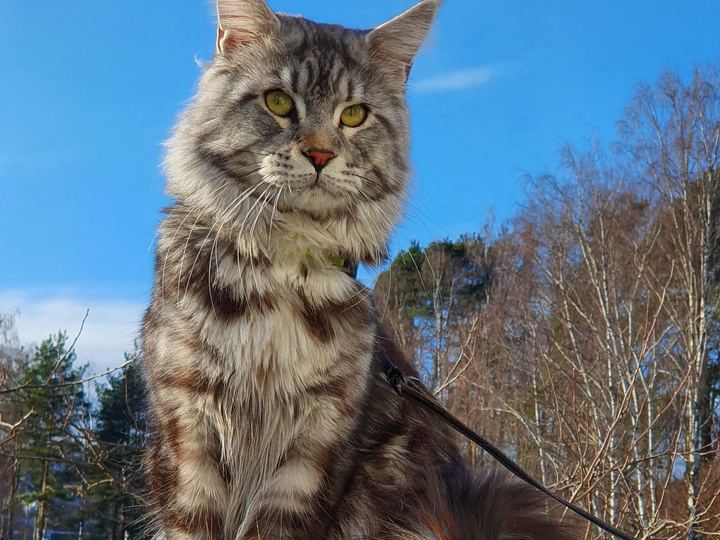
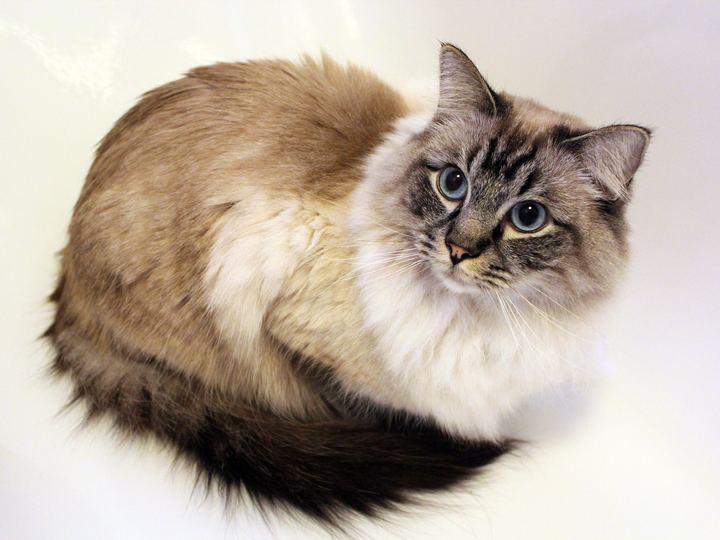
The breed's thick neck ruff, tufted ears and furry toes protect it from snow. Wegies are often confused with Maine Coons, but they have a straight profile and a more triangular head. They can take up to five years to reach full size, so a young Wegie may keep growing long after kittenhood.
A day in the life
A typical day with a Norwegian Forest Cat includes climbing sessions, some play with wand toys, a lot of relaxing near the family and a weekly brush. Many like a high perch near a window. They are generally patient and sociable, making them good companions for calm children and other pets.
Health and good to know
If you are choosing a Wegie, ask breeders for heart screening results and DNA tests, and meet the parents if you can. Adults in rescue are often calm, easy cats that settle quickly into a new family.
Health checks to ask about include heart screening and a rare inherited condition called glycogen storage disease type IV, which can be DNA tested.
Every pet is an individual, so use this as a starting point and ask your vet about diet, vaccines and health checks for your own animal.
- A Norwegian Forest Cat in snow: Durator, Public domain
Text written by Most Beautiful Pets.